Home Wind Turbine Guide
Honest, plain-English help for powering a home, farm or cabin with the wind.
Check Your Wind FirstIs a Home Wind Turbine Right for You?
A home wind turbine can cut or even replace your electric bill — but only in the right place. This guide explains, in plain English, how small wind works, how to tell whether your property has enough wind, what drives the cost of a home wind turbine, and how to shop for kits and complete systems without getting burned.
Small wind is one of the oldest forms of home power in rural America, and it has quietly improved. Modern turbines are certified, grid-friendly and built to run for decades. Yet wind is also the most site-sensitive renewable you can buy. A turbine that pays its way on an open hilltop can be a costly lawn ornament in a wooded subdivision. The difference comes down to a few physical facts about wind, height and obstacles that no sales brochure can change.
We built Personal Wind Farms to give you those facts before you talk to a dealer. We lean on the U.S. Department of Energy’s Small Wind Handbook, the certification body ICC-SWCC (Small Wind Certification Council) and the incentive database DSIRE, and we link to them so you can check every number yourself.
How It Works
Blades, generator, tower and inverter — and why a little more wind makes a lot more power.
Is Your Site Windy Enough?
Average wind speed, tower height, the 30-foot rule and how much land you need.
What Drives the Cost
Turbine size, tower, installation, permits, batteries and upkeep — the parts of the bill.
System Types
Grid-tied, off-grid and hybrid home wind turbine systems, with or without batteries.
Kits & Buying Checklist
What to check before you buy a kit or a turbine listed for sale, starting with certification.
Wind vs Solar
Where each one shines, and why many rural homes use both.
Permits & Net Metering
Zoning height limits, building permits, utility interconnection and incentives.
Three Questions to Answer First

1. Do you have the wind?
Wind energy rises with the cube of wind speed, so a site with slightly stronger wind produces far more power. Start with a wind map, then confirm at hub height.
Check your wind →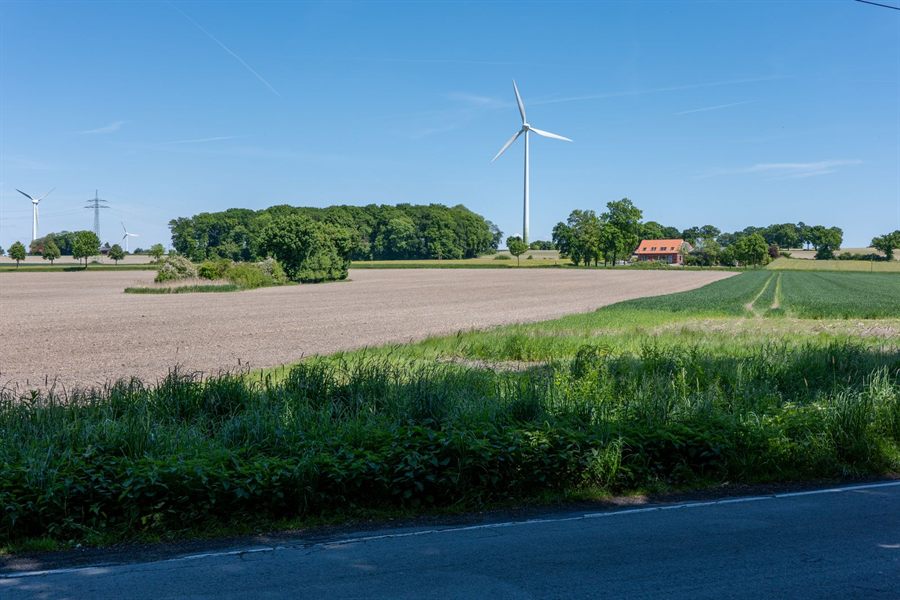
2. Do you have the room?
The DOE suggests at least an acre, a tower that puts the rotor well above nearby trees and buildings, and space for guy wires if the tower uses them.
Zoning and permits →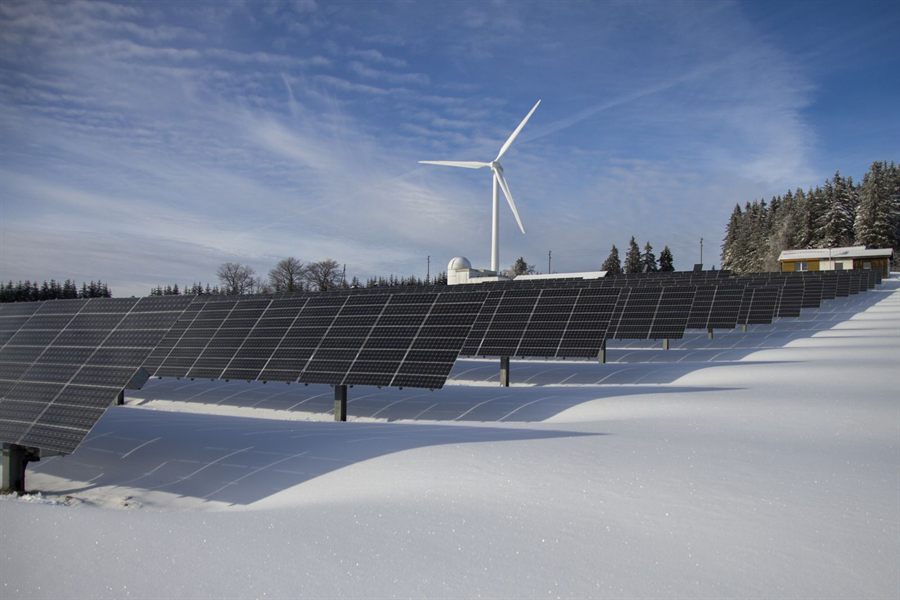
3. What do you want it to do?
Trim a grid bill, power an off-grid cabin, or back up a farm? The answer decides whether you need batteries, an inverter only, or solar alongside.
Compare system types →What a Home Wind Turbine Can and Cannot Do
Small wind turbines range from tiny battery chargers of a few dozen watts to machines of 100 kilowatts that run a whole farm. For a typical household, the DOE estimates that a turbine in roughly the 5 to 15 kilowatt range is needed to cover most electricity use, and that only holds at a site with good wind.
What a home turbine cannot do is overcome a poor site. Trees, houses and hills break the wind into turbulence, which cuts output and wears parts faster. Rooftop and “building-mounted” turbines suffer most. That is why serious installers start with the wind and the tower, and only then choose a turbine.
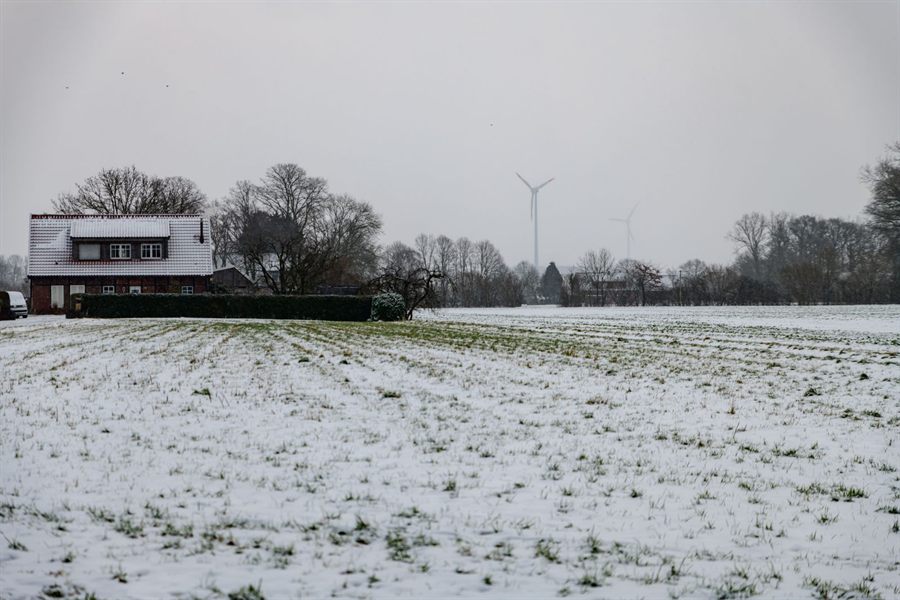
Done well, a home wind turbine system can run quietly for twenty years or more. Done badly — too short a tower, an uncertified machine, a site boxed in by trees — it can disappoint from the first week. Our buying checklist is built around avoiding the common mistakes.
Kits, Complete Systems and Turbines for Sale
When people search for home wind turbine kits or home wind turbines for sale, they find everything from rooftop gadgets to professional systems with towers, controllers and inverters. Those are not the same product. A “kit” may be only the turbine head and blades; the tower, foundation, wiring, inverter and installation are often extra and can be the larger part of the job.
- Ask whether the turbine is certified by an accredited body, and look it up in the ICC-SWCC directory of certified turbines.
- Compare rated annual energy at a stated average wind speed, not peak watts printed on the box.
- Get the tower height, foundation and installation spelled out in writing.
- Check the warranty, the parts supply and who will service the turbine in ten years.
- Confirm with your county and utility before you pay a deposit.
We do not sell turbines or recommend brands. When you are ready to talk to installers and electricians near you, Best of the USA lists local businesses across the country.
Home Wind Turbine Questions
Can a home wind turbine power a whole house?
It can, at a windy site with enough land and a turbine sized to the household’s use. The Department of Energy notes that an average home usually needs a turbine rated somewhere around 5 to 15 kilowatts to cover most of its electricity, and that depends heavily on the local wind.
How windy does it need to be?
The DOE’s Small Wind Handbook treats an average annual wind speed of at least 10 mph as the practical floor for a grid-connected home system, and about 9 mph for an off-grid hybrid system. Measure or estimate your wind at the height the turbine will sit, not at ground level.
Can I mount a wind turbine on my roof?
It is generally discouraged. Air around a house is turbulent, the turbine passes vibration and noise into the structure, and output is lower than on a proper tower in clean wind.
How long does a small wind turbine last?
With a sound installation and regular maintenance, the DOE says a small turbine should last 20 years or longer, though blades or bearings may need replacing after about 10 years.
Start With Your Wind
Before you price a single turbine, find out whether your property has the wind to make it worthwhile. Our siting guide walks you through it step by step.
Check If Your Site Is Windy Enough